
Seasonal Pricing for Retail: Strategy, Examples and Guardrails
Seasonal pricing is the planned adjustment of prices around predictable changes in demand, inventory and market behavior. In retail, seasonality can come from holidays, weather, school calendars, gifting periods, product launches or the natural lifecycle of a category.
The strongest seasonal-pricing strategy is not simply 'raise prices in peak season and discount afterward.' It defines what should change, when it should change, and which business rules remain fixed throughout the season.
Start with the seasonal demand curve
Before changing prices, identify how the category normally behaves across the year. Look for repeatable periods of rising demand, peak demand, slowdown and clearance.
Historical sales, traffic, conversion, inventory and competitor pricing can help distinguish a true seasonal pattern from a one-time event.
Four phases of a seasonal pricing plan
1. Pre-season
Demand is beginning to build, but the market has not fully tightened. This is the time to establish baseline price ranges, margin floors and competitor sets.
2. Peak season
Demand is strongest and inventory risk shifts from excess stock to potential stockouts. Retailers may have more room to protect or increase margin, especially if competitors also move upward.
3. Late season
The priority begins to shift from margin expansion toward sell-through. Pricing rules can become more aggressive as the cost of carrying remaining inventory increases.
4. Clearance or transition
Products approaching obsolescence or the next assortment cycle may need structured markdowns. The objective is inventory reduction, but margin floors and markdown limits still matter.
Signals to combine with seasonality
Current inventory and weeks of supply.
Sell-through rate versus the seasonal plan.
Competitor price movement.
Traffic, conversion and demand trend.
Promotion calendar.
Market or country context.
Margin and markdown constraints.
Example: seasonal apparel
A retailer selling winter jackets might maintain stronger margins early in the season when demand rises, hold position during the peak, and introduce increasingly aggressive markdown rules as the season approaches its end.
The important point is that the timing is planned in advance while the exact price can still respond to live demand, inventory and competitor conditions.
Example: gifting and holiday products
A gift-oriented category can see sharp demand growth before a holiday. If stock is limited, a retailer may prioritize availability and margin rather than chasing every competitor discount. After the event, the same products may need fast markdowns because demand falls abruptly.
Why seasonal pricing should not run without guardrails
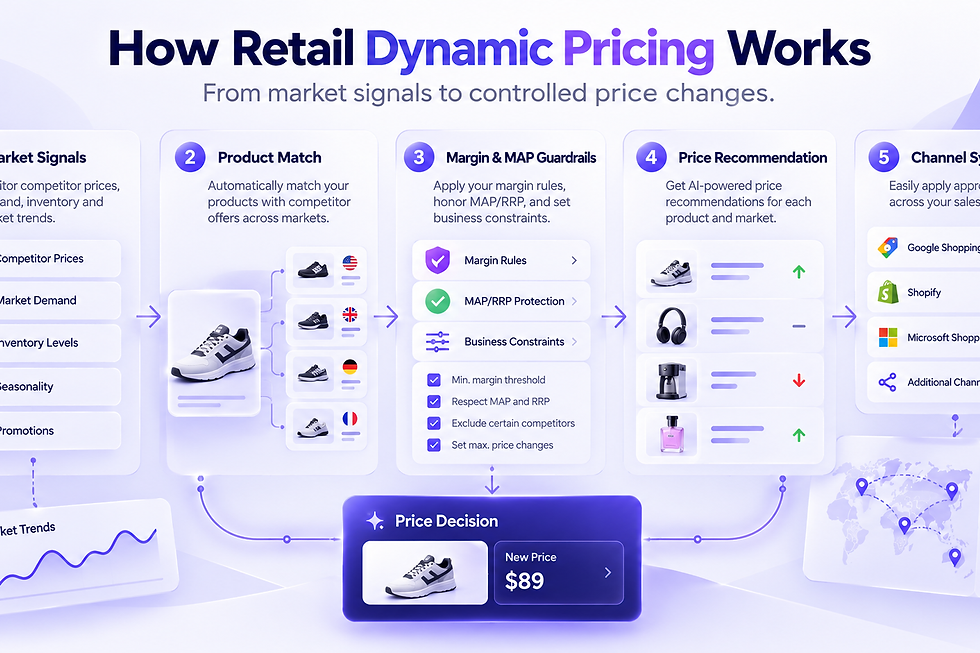
Seasonal demand can move quickly, which makes automation useful — but also increases the cost of bad data. A competitor's temporary promotion or an inventory mismatch can create unnecessary price changes if the system reacts without context.
A practical seasonal-pricing checklist
Map the expected seasonal phases before the season begins.
Set different pricing objectives for pre-season, peak, late season and clearance.
Define margin floors and maximum markdowns.
Use inventory and sell-through as active signals.
Track relevant competitor changes without blindly matching them.
Review rules by market if seasonality differs by country.
Measure the outcome after the season and update next year's rules.
Frequently asked questions
What is seasonal pricing?
Seasonal pricing is the planned adjustment of prices in response to predictable seasonal changes in demand, inventory and market conditions.
Is seasonal pricing the same as discounting?
No. Seasonal pricing can involve increases, decreases or holding price depending on the stage of the season and the retailer's objective.
When should seasonal prices change?
The timing should follow the category's demand and inventory pattern rather than a fixed calendar alone. Live market data can refine the exact decision within each planned phase.

