Understanding the Role of RRP in Pricing
Updated: 2 days ago
When you’re managing a retail business with a large number of SKUs, pricing can feel like walking a tightrope. You want to stay competitive, keep your customers happy, and still make a profit. One tool that can help you balance all these factors is the Recommended Retail Price, or RRP. But what exactly is RRP, and how does it fit into your pricing strategy? Let’s dive in and explore this essential concept together.
Quick answer
RRP means Recommended Retail Price: a price suggested by a manufacturer or supplier. It can provide a useful benchmark, but retailers still need to consider local competition, costs, margins, and applicable pricing rules.
What Is MAP Pricing and Is It Legal? — a useful next step if you want to go deeper.
What Is RRP and Why Does It Matter in Business Pricing?
RRP stands for Recommended Retail Price. It’s the price that manufacturers or suppliers suggest retailers charge for a product. Think of it as a guidepost, a starting point for pricing decisions. It’s not a fixed rule, but more like a friendly nudge in the right direction.
Why does RRP matter? Because it helps create consistency across different retailers. When everyone follows the RRP, customers get a clear idea of what a product should cost, no matter where they shop. This consistency builds trust and reduces confusion.
For retailers with high SKUs, especially across markets like the UK, Germany, the Netherlands, Australia, Canada, and the United States, RRP can simplify pricing management. It provides a benchmark that helps you avoid underpricing or overpricing your products.
But remember, RRP is just a recommendation. You can adjust prices based on your costs, competition, and customer demand. The key is to understand how to use RRP effectively without losing your edge.
How RRP Influences Business Pricing Strategies
Using RRP in your pricing strategy can be a game-changer. Here’s how it influences your approach:
Price Consistency: RRP helps maintain uniform pricing across different stores and regions. This consistency is crucial for brand reputation and customer trust.
Competitive Edge: While RRP sets a baseline, you can choose to price slightly below it to attract bargain hunters or above it if you offer added value.
Profit Margin Control: Knowing the RRP allows you to calculate your margins more accurately. You can decide how much discount to offer without hurting your bottom line.
Customer Expectations: Customers often expect prices close to the RRP. Pricing too far off can raise suspicion or reduce perceived value.
Promotional Planning: RRP serves as a reference point for sales and discounts. It helps customers see the value of your offers clearly.
For example, if a supplier sets an RRP of £50 for a gadget, pricing it at £45 might attract more buyers while still keeping profits healthy. On the other hand, pricing it at £55 might work if you bundle it with excellent customer service or warranty.
How Does the RRP Work?
Understanding how RRP works in practice is essential. Here’s a step-by-step look:
1. Manufacturer Sets the RRP: The product maker calculates the ideal retail price based on production costs, market research, and competitor pricing.
2. Supplier Communicates RRP: This price is shared with retailers as a recommended selling price.
3. Retailer Evaluates RRP: You assess the RRP against your own costs, local market conditions, and customer preferences.
4. Retailer Sets Final Price: You decide whether to stick to the RRP, go higher, or offer discounts.
5. Price Monitoring: You keep an eye on competitor pricing and customer feedback to adjust as needed.
It’s important to note that in some countries, RRP is strictly a recommendation and cannot be enforced legally. Retailers have the freedom to set their own prices, but ignoring the RRP entirely might confuse customers or damage supplier relationships.
Using RRP effectively means balancing supplier guidance with your unique business needs. It’s like having a map but choosing your own route to the destination.
Practical Tips for Using RRP in Your Pricing Decisions
Now that you know what RRP is and how it works, here are some actionable tips to make the most of it:
Analyze Your Costs: Always calculate your total costs before setting prices. RRP is a guide, but your costs determine your minimum price.
Research Your Market: Look at competitors’ prices and customer expectations in your region. This helps you decide how closely to follow the RRP.
Use RRP for Promotions: Highlight discounts by showing the RRP alongside your sale price. This creates a sense of value.
Communicate Clearly: Make sure your pricing strategy is transparent to customers. Explain why your prices might differ from the RRP if needed.
Stay Flexible: Markets change, and so should your pricing. Use RRP as a flexible tool, not a rigid rule.
Leverage Technology: Use pricing software to track RRPs, competitor prices, and sales data. This helps you make informed decisions quickly.
For retailers juggling thousands of SKUs, these tips can streamline pricing and improve profitability without overwhelming your team.
Why Understanding RRP Is a Smart Move for Retailers
Grasping the role of RRP in pricing isn’t just about following supplier suggestions. It’s about using a powerful tool to enhance your business strategy. When you understand RRP, you can:
Build Stronger Supplier Relationships: Respecting the RRP shows you value the supplier’s input, which can lead to better deals and support.
Improve Customer Trust: Consistent pricing aligned with RRP reassures customers they’re getting a fair deal.
Optimize Inventory Management: Pricing products correctly helps move stock faster and reduces markdowns.
Increase Profit Margins: Smart use of RRP lets you find the sweet spot between competitive pricing and profitability.
Adapt to Regional Differences: Since you operate in multiple countries, understanding local RRP norms helps tailor your pricing effectively.
If you want to dive deeper into the details, check out our RRP resources for more insights.
Pricing is an art and a science. RRP is one of the brushes in your toolkit. Use it wisely, and you’ll paint a picture of success that customers and suppliers both appreciate.
Related Intelis guides
Frequently asked questions
What does RRP stand for?
RRP stands for Recommended Retail Price, a price suggested by a manufacturer or supplier for a product.
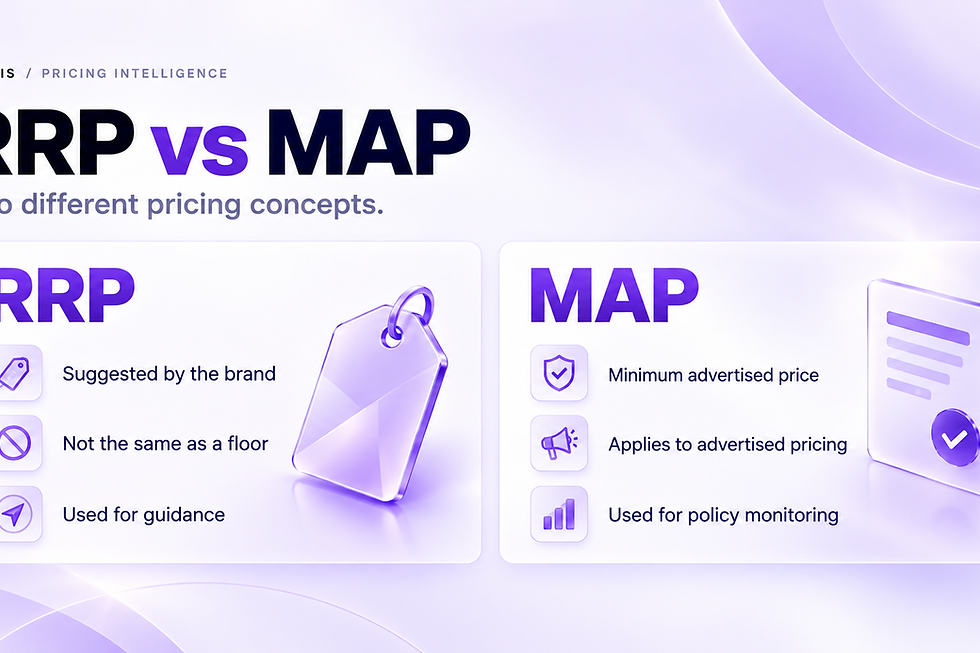
Is RRP the same as MAP?
No. RRP is a recommended resale price, while MAP refers to a minimum advertised price policy. Their legal treatment can differ by jurisdiction.
Should retailers always follow the RRP?
Not necessarily. Retailers usually need to consider their own costs, margins, market conditions and applicable rules when setting final prices.


