How Google Ads Affects Pricing: Understanding the Impact of Ad Performance on Your Business
When you run a retail business with a large number of SKUs, pricing can feel like a moving target. One factor that often flies under the radar but plays a huge role is how your ads perform. You might wonder, how exactly does the success or failure of an ad campaign influence the prices you set? Let’s dive into this topic and unpack the connection between advertising and pricing strategies.
How Google Ads Affects Pricing: The Direct Link
Advertising is not just about getting eyeballs on your products. It’s a powerful tool that shapes customer perception, demand, and ultimately, your pricing power. When your ads resonate well with your audience, they create a buzz that can justify higher prices. Conversely, if your ads fall flat, you might find yourself forced to lower prices to attract buyers.
Think of it like a spotlight on a stage. A well-placed spotlight (effective ad) makes the actor (your product) shine brighter, drawing more attention and applause (sales). When the spotlight dims, the actor blends into the background, and the audience’s interest wanes.
Here’s how this plays out in practice:
Increased demand from successful ads allows you to maintain or raise prices without losing customers.
Poor ad engagement means you might need to offer discounts or promotions to boost sales.
Ad costs and ROI also factor into pricing decisions. If your ads are expensive but don’t convert, you’ll need to adjust prices to cover costs.
Understanding this dynamic helps you set prices that reflect not just your costs but also the market’s response to your marketing efforts.

What is a performance ad?
Before we go further, it’s important to clarify what a performance ad is. Simply put, a performance ad is a type of advertising designed to drive specific actions—like clicks, conversions, or sales—rather than just brand awareness. These ads are highly measurable, allowing you to track exactly how well they perform against your goals.
Performance ads are often used in digital marketing channels such as:
Search engine marketing (Google Ads)
Social media ads (Facebook, Instagram)
Affiliate marketing
Programmatic advertising
The key benefit of performance ads is their focus on results. You can see which ads generate the most sales or leads and adjust your strategy accordingly. This data-driven approach helps you optimize your budget and pricing strategies based on real customer behavior.
How Ad Performance Influences Pricing Strategy
Now that we know what performance ads are, let’s explore how their success impacts pricing decisions. When you run campaigns that deliver strong results, you gain valuable insights into customer willingness to pay and product demand. This information can be a game-changer for pricing.
1. Pricing Based on Customer Response
If your ads show that customers are highly engaged and converting at a good rate, it signals strong demand. You can leverage this by:
Increasing prices on popular items without hurting sales.
Reducing discounts or promotional offers.
Bundling products at a premium price.
On the flip side, if ad engagement is low, it might indicate that your price point is too high or your product messaging isn’t resonating. This feedback allows you to tweak prices or reposition your products.
2. Dynamic Pricing and Real-Time Adjustments
With performance data in hand, you can implement dynamic pricing strategies. For example:
Adjust prices based on ad click-through rates and conversion rates.
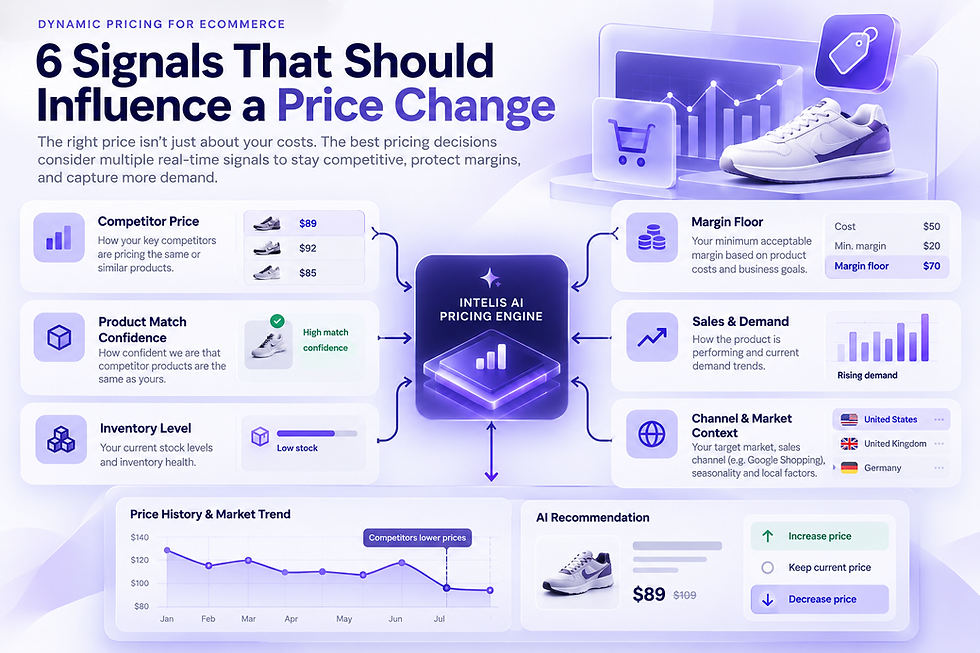
Use automated tools to raise prices when ads perform well and lower them when performance dips.
Test different price points in ads to find the sweet spot that maximizes profit.
This approach is especially useful for retailers with a large SKU count, where manual pricing adjustments would be overwhelming.
3. Budget Allocation and Cost Recovery
Ad campaigns cost money, and those costs need to be factored into your pricing. If your ads are performing well, you might justify a higher ad spend to capture more market share. However, if the return on ad spend (ROAS) is low, you’ll need to reconsider your pricing to cover advertising expenses.
In other words, your pricing strategy should reflect not only product costs but also the efficiency of your advertising efforts.

Practical Tips for Retailers Managing Pricing and Ads
Managing pricing alongside ad campaigns can feel like juggling multiple balls at once. Here are some actionable tips to help you stay on top of both:
Track ad metrics closely: Monitor click-through rates, conversion rates, and ROAS to understand how your ads impact sales.
Segment your SKUs: Group products by performance and price sensitivity to tailor pricing and ad spend effectively.
Test pricing in ads: Use A/B testing to experiment with different price points and messaging.
Use automation tools: Leverage pricing software that integrates with your ad platforms for real-time adjustments.
Align marketing and pricing teams: Ensure your marketing and pricing strategies are coordinated to maximize impact.
Focus on customer value: Highlight the benefits and unique selling points in your ads to justify your pricing.
By combining these strategies, you can create a pricing model that adapts to market feedback and maximizes profitability.
Looking Ahead: The Future of Pricing and Advertising
The relationship between advertising and pricing is evolving rapidly. With advances in AI and machine learning, retailers can expect even more sophisticated tools to analyze ad data and optimize prices in real time. Imagine a system that automatically adjusts prices based on live ad performance, competitor pricing, and inventory levels.
For retailers with extensive product catalogs, this means less guesswork and more precision. You’ll be able to respond instantly to market changes and customer behavior, keeping your pricing competitive and your ads effective.
In the meantime, focusing on the fundamentals—understanding how your ads affect demand and pricing—will give you a solid foundation to build on.
If you want to dive deeper into how ad performance can transform your pricing strategy, keep exploring and experimenting. The better you understand this connection, the more control you’ll have over your business success.