Dynamic Pricing Tools: 9 Capabilities Retailers Should Compare
Updated: 2 days ago
In today’s fast-paced retail world, pricing isn’t just about setting a number and sticking to it. It’s about adapting, reacting, and optimizing in real time. That’s where dynamic pricing tools come into play. These tools help retailers with large inventories adjust prices smartly, keeping them competitive and profitable. If you’ve ever wondered how to stay ahead in a crowded market, this post is for you.
Quick answer
A strong dynamic pricing tool does more than change prices. It should combine reliable market data, accurate product matching, business guardrails, explainable recommendations, controlled automation and the integrations needed to execute changes safely.
Why Dynamic Pricing Tools Matter for Retailers
Imagine you’re running a store with thousands of products. Prices fluctuate daily due to demand, competition, and even seasonality. Managing this manually? Nearly impossible. Dynamic pricing tools automate this process, analyzing data and adjusting prices instantly.
Here’s why they’re game-changers:
Stay competitive: Prices reflect the market, so you don’t lose customers to cheaper alternatives.
Maximize profits: Increase prices when demand is high, and lower them to clear stock.
Save time: Automation frees you from tedious manual updates.
Respond to trends: Quickly adapt to competitor moves or sudden changes in demand.
For example, a retailer in the UK selling electronics can use dynamic pricing tools to monitor competitors’ prices across Europe and adjust accordingly. This keeps their offerings attractive without sacrificing margins.

How Dynamic Pricing Tools Work
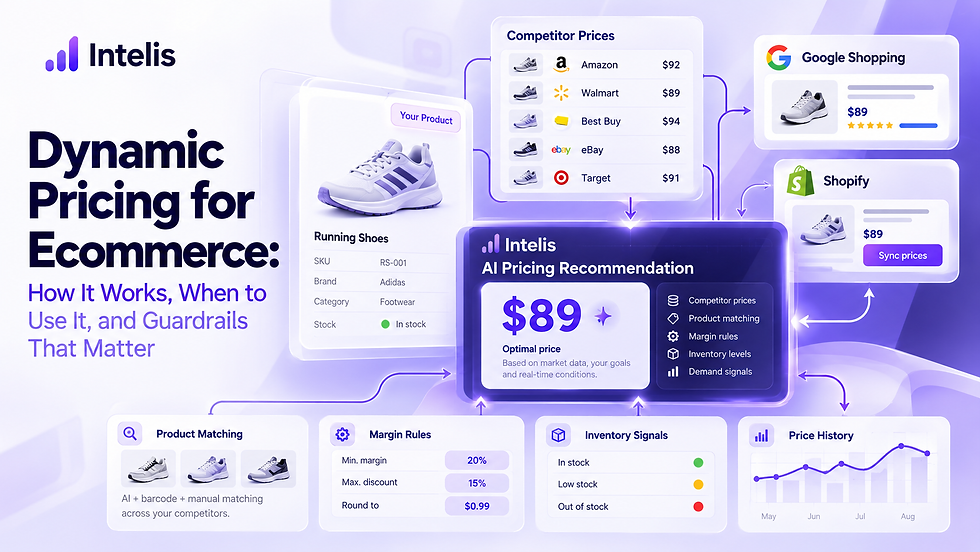
At their core, dynamic pricing tools gather data from multiple sources:
Competitor prices
Customer demand patterns
Inventory levels
Seasonal trends
Market conditions
Then, they apply algorithms to calculate the optimal price for each SKU. Some tools use machine learning to improve accuracy over time.
Let’s break down the process:
Data Collection: The tool scans competitor websites, sales history, and market trends.
Analysis: It identifies patterns like peak buying times or price sensitivity.
Price Adjustment: Based on rules you set (minimum margin, max discount), prices update automatically.
Monitoring: The system tracks performance and tweaks strategies as needed.
For instance, a Canadian retailer with thousands of SKUs can set rules to never drop below a certain profit margin, ensuring pricing stays profitable even during sales.
Choosing the Right Dynamic Pricing Tools
Picking the right tool can feel overwhelming. Here’s what to look for:
Scalability: Can it handle your SKU volume without lag?
Customization: Does it allow you to set pricing rules tailored to your business?
Integration: Will it work smoothly with your existing e-commerce platform or ERP?
User-friendly interface: Is it easy to understand and operate?
Support and updates: Does the provider offer reliable customer service and regular improvements?
I recommend starting with a trial or demo to see how the tool fits your workflow. Also, check if it supports your regional market specifics, like currency and tax rules.

Practical Tips to Maximize Dynamic Pricing Benefits
Using dynamic pricing tools effectively requires more than just installation. Here are some actionable tips:
Set clear pricing rules: Define minimum and maximum prices, discount limits, and margin thresholds.
Segment your products: Different categories may need different pricing strategies.
Monitor competitor behavior: Keep an eye on how competitors react to your price changes.
Test and learn: Run A/B tests to see which pricing strategies work best.
Communicate with your team: Ensure everyone understands how pricing changes impact sales and inventory.
For example, a retailer in Australia might use dynamic pricing to boost sales on slow-moving items by lowering prices during off-peak seasons, while keeping high-demand products priced competitively.
The Future of Retail Pricing is Dynamic
Dynamic pricing tools are not just a trend; they’re becoming essential for retailers managing large inventories across multiple regions. By embracing these tools, you can:
React faster to market changes
Improve customer satisfaction with fair, competitive prices
Increase revenue without sacrificing margins
Gain valuable insights into buying behavior
If you want to stay ahead, consider integrating dynamic pricing software into your retail strategy. It’s like having a smart assistant that never sleeps, always working to optimize your prices and boost your bottom line.
Harnessing the power of dynamic pricing tools means turning complexity into opportunity. It’s time to let technology do the heavy lifting so you can focus on growing your business.
What to compare in dynamic pricing tools
Reliable competitor data
Pricing decisions are only as good as the market data behind them. Evaluate coverage, refresh cadence, seller context and how the tool handles temporary promotions or out-of-stock offers.
Accurate product matching
The tool should correctly connect equivalent SKUs, variants, pack sizes and models across retailers. Matching confidence matters because bad matches create bad pricing inputs.
Margin and business guardrails
Look for minimum margin rules, maximum price changes, brand or category constraints, MAP/RRP logic where relevant, and the ability to exclude unreliable competitors.
Recommendation transparency
Teams should be able to understand why a price was suggested, which signals influenced it, and which rule prevented or allowed a change.
Approval and automation controls
The strongest platforms support a spectrum from recommendation-only workflows to auto-approval for low-risk changes and full automation where appropriate.
Price history and audit trail
Historical pricing helps teams identify trends, review previous decisions and explain why a price changed.
Multi-market support
Retailers operating across countries need market-specific currencies, rules, competitors and price logic rather than one global price strategy.
Storefront and feed integrations
Pricing software becomes more valuable when approved changes can flow into ecommerce systems, product feeds and other downstream channels without manual re-entry.
Analytics and performance feedback
A pricing tool should help teams evaluate what happened after a price change rather than treating the update itself as the end of the process.
Related Intelis guides
Frequently asked questions
What should I look for in dynamic pricing software?
Prioritize data quality, product matching, pricing guardrails, automation controls, integrations, history, analytics and support for the markets where you sell.
Is a repricer the same as a dynamic pricing tool?
Not always. A repricer may focus mainly on changing listed prices, while a broader dynamic-pricing platform can combine market intelligence, business rules, approval workflows, analytics and multiple pricing signals.
Should dynamic pricing be fully automated?
It depends on the quality of the data and the commercial risk. Many retailers automate low-risk decisions while requiring approval for larger or strategically sensitive changes.